Eugene Marathon 2026 Race Report
My first BQ!

Sunday, 4/26/2026
Weather: 34°F/67°F and sunny


Goals: My main goal this race was to BQ (Boston Qualify) with a strong buffer.
A BQ lets you apply to Boston– however, more runners qualify than there are bibs. Only the fastest qualifiers get accepted into the race. A BQ-buffer would allow me to actually race Boston.
I spent most of training targeting a ~3:15 pace. The BQ time for my age/gender is 3:25 and a 7+ minute buffer is considered very safe. Aiming for 3:15 would give me buffer on my buffer. This would also get me into the Chicago Marathon (which is guaranteed entry for women my age with a sub-3:20).
Towards the end of training, I started wondering if I could potentially go sub-3:10 (stretch goal). I had backup goals as well (3:20 for CHI, 3:25 for the BQ without a buffer, PRing (sub-3:34), and just having fun).
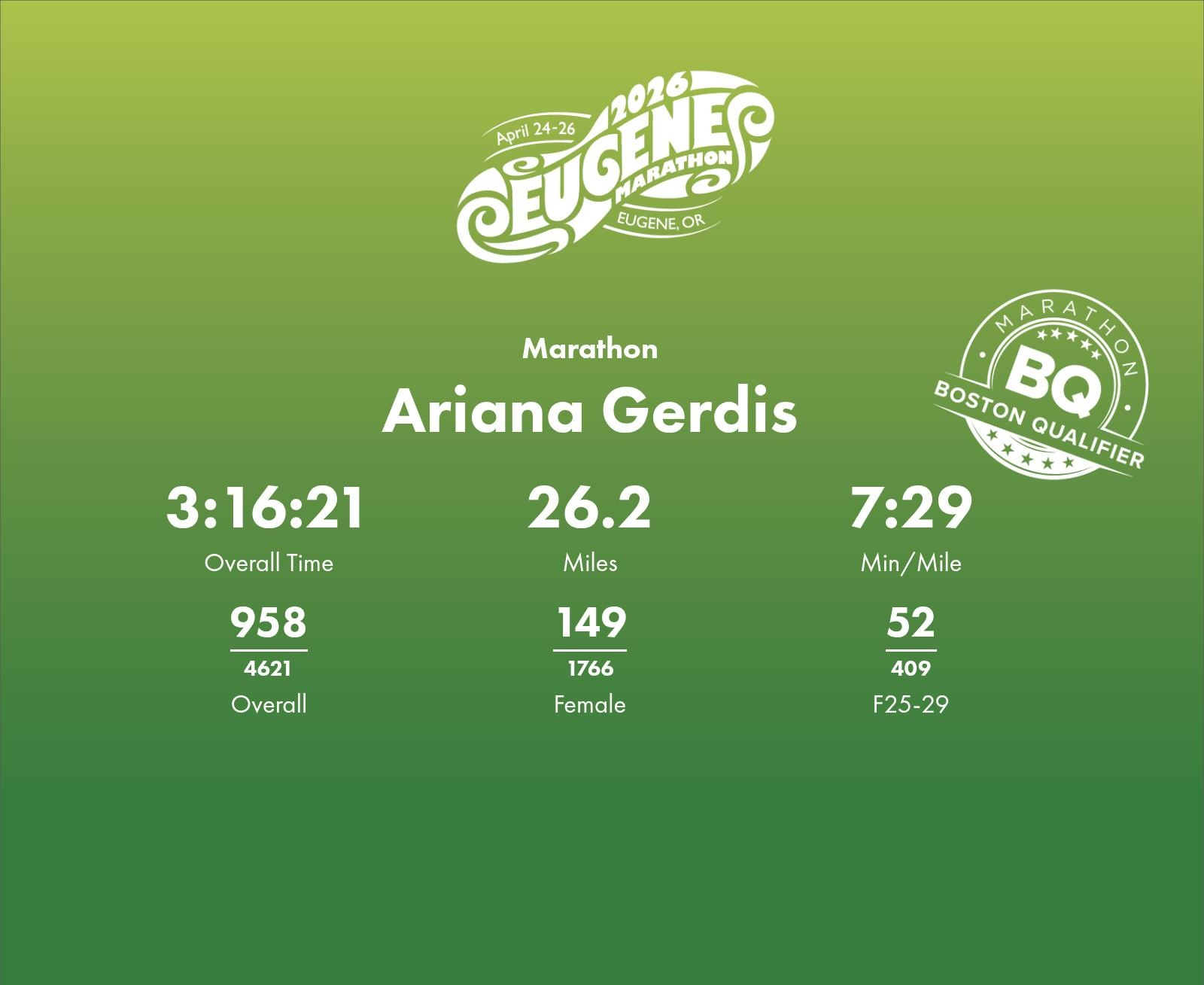
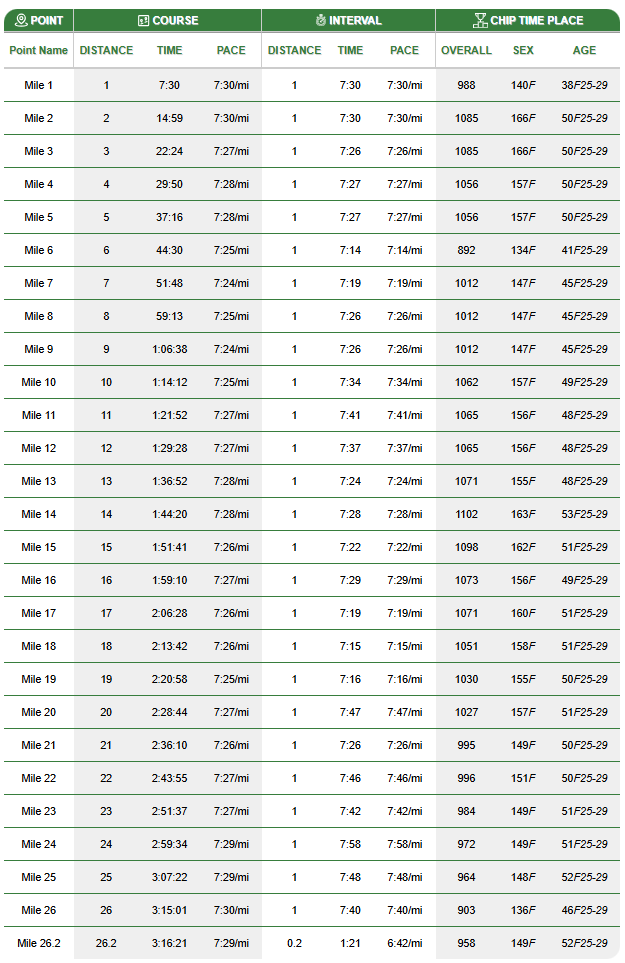
Finish Time: 3:16:21 (7:29 pace)
Map:
Course:
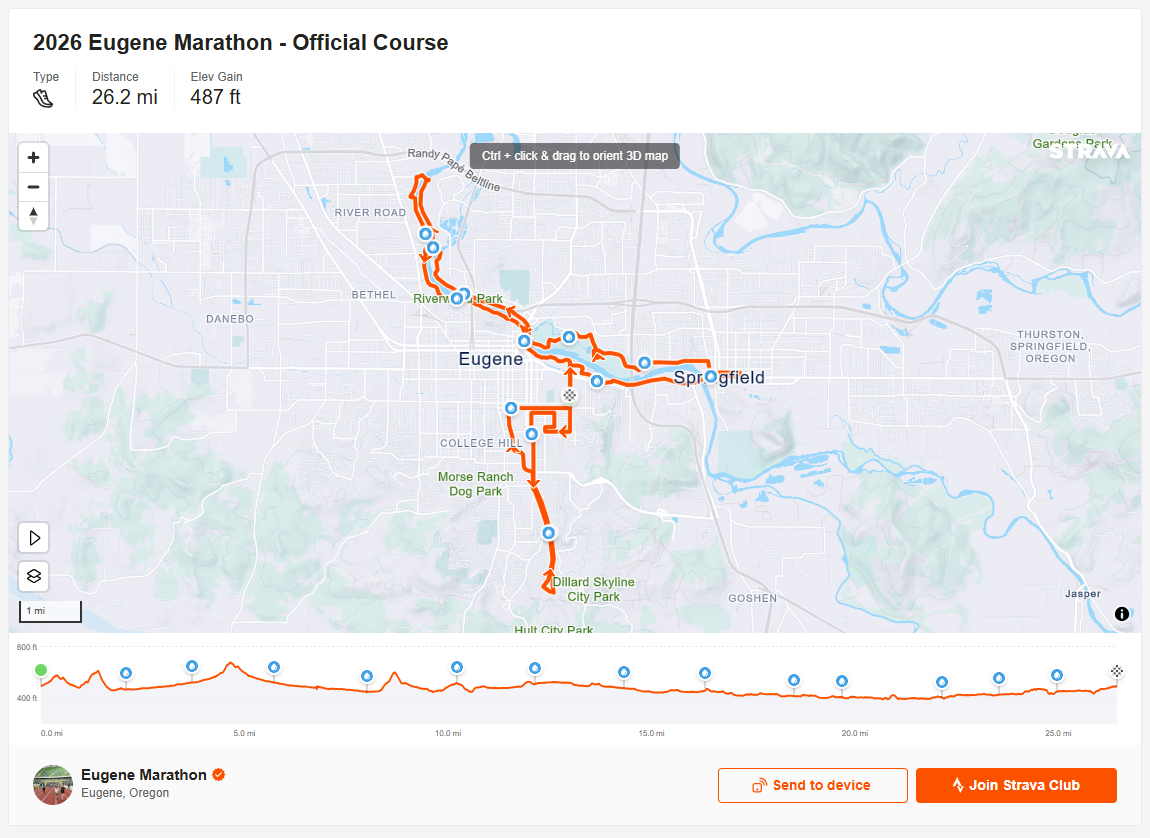
I enjoyed the course!
As a hill-trained trail runner, the race felt hillier than expected. My watch logged 669 ft. I think it was the placement of the hills (they're clustered right at the start and exposed in direct sunlight). A lot of the course is sun-exposed, which also made race day feel a lot hotter than expected. Maybe I just had a weird day.
The half and full start together for the first ~10 miles, so the course is quite packed until the split. It felt like a fast-moving river current!
I enjoyed running along the Willamette River and the Eugene crowds SHOWED UP! The spectators were amazing. Greg brought his bike and was able to catch me seven (7!!!) times!!
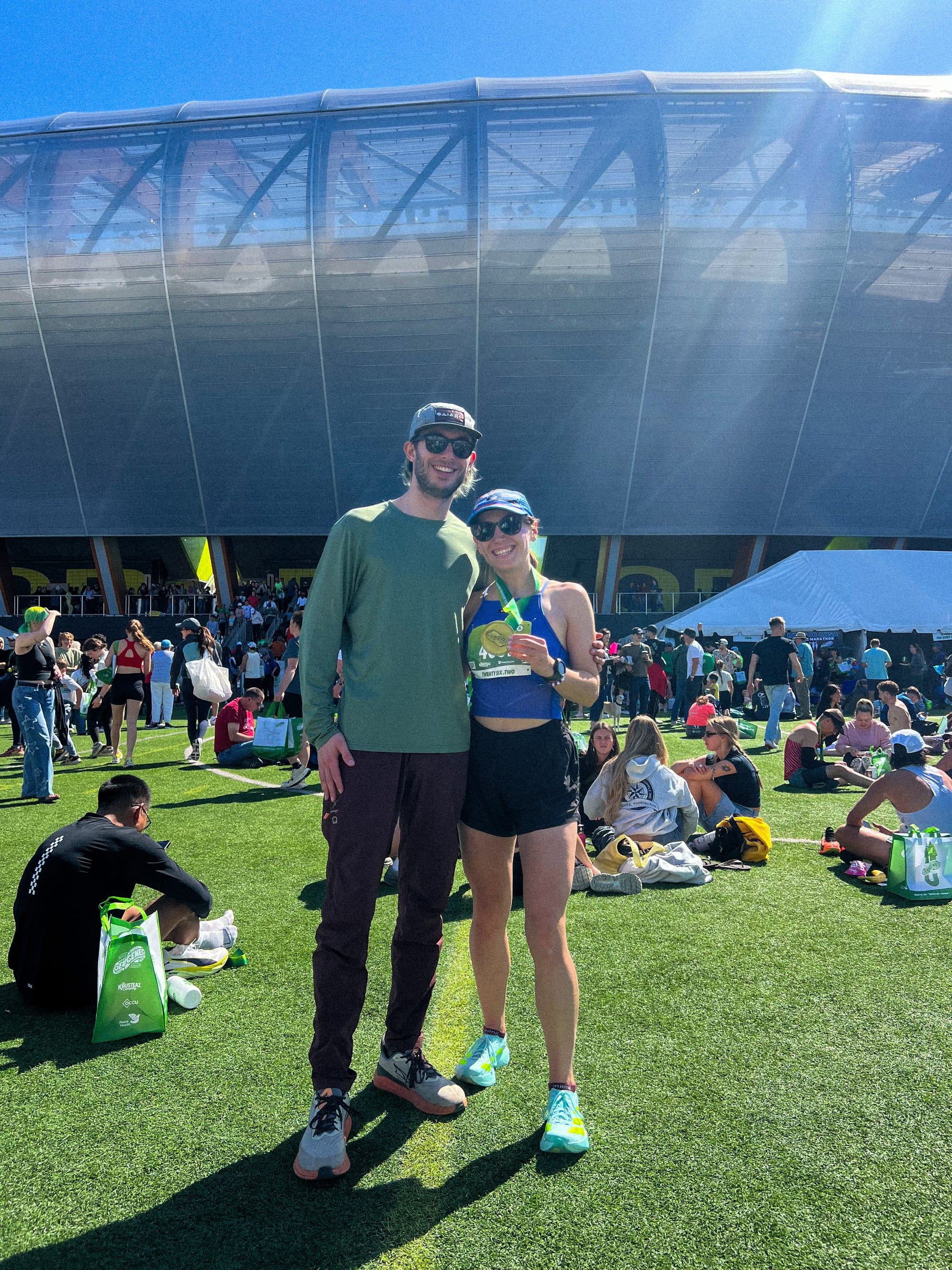
Finishing on Hayward Field is so iconic– and there really is something about running on a track that makes you want to sprint and leave it all out there. Even after 26.2 miles.
The start line has a gear check, pacers (down to a 2:55 full or a 1:30 half), and corrals. The marathon course has 12 aid stations, every ~2 miles. Water and Gatorade Endurance Lemon-Lime are at every aid station. Bananas are at miles 14 and 22. Gu Energy Gels (strawberry banana, chocolate outrage, vanilla) are at miles 8, 20, and 25. There were a lot of bathrooms and medical tents along the course as well.
Logistics:
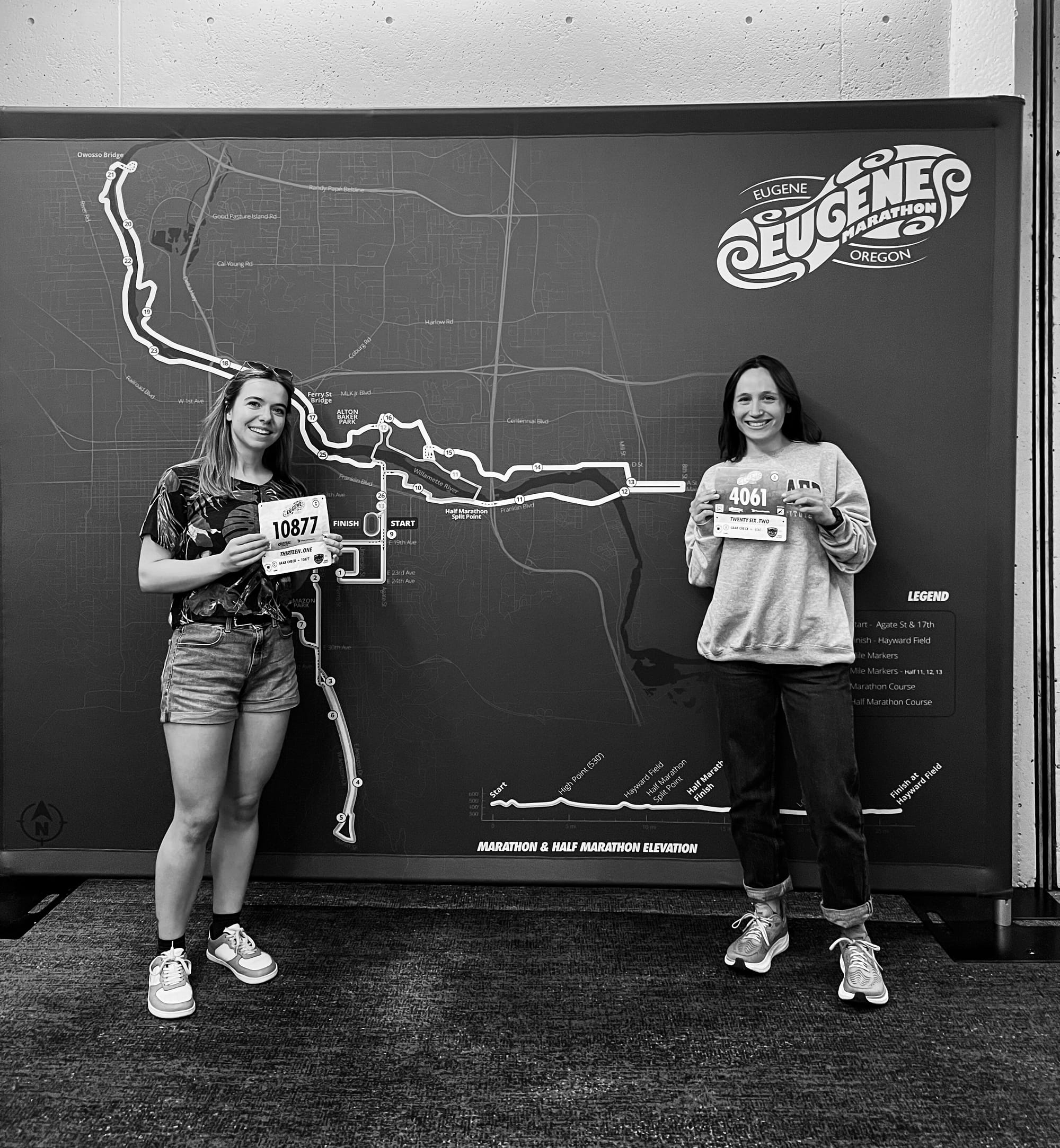
For west-coasters, this is a logistically smooth race! Saturday morning, we did our last shakeout runs in Seattle. Then our friend group drove 4.5 hours down to Eugene to pick up our bibs and check into a house we rented ~15-20 minutes from the race start. The expo was fun and easy to navigate. There were a lot of people but no lines!
Getting to the start is more logistically challenging if you don't live in the PNW. Eugene is a small airport without a lot of direct flights (a lot of cities will connect through Seattle) and it makes for a long travel day.
The race starts and ends near Hayward Field. Eugene Marathon offers some shuttles to the start from hotels/locations around the city. Since we had some friends coming to watch us, they drove us to a drop-off zone near the start (conveniently next to a University of Oregon parking lot that was free on Sundays!).
There were plenty of portapotties in the starting village (and near the finish as well) and more to the left of the corrals. If a line is long, just keep walking! You will find one.
Atmosphere:
The crowds showed up to the largest marathon in the PNW! The spectators were amazing. So many kind, supportive people were lining the streets of Eugene.
Training:
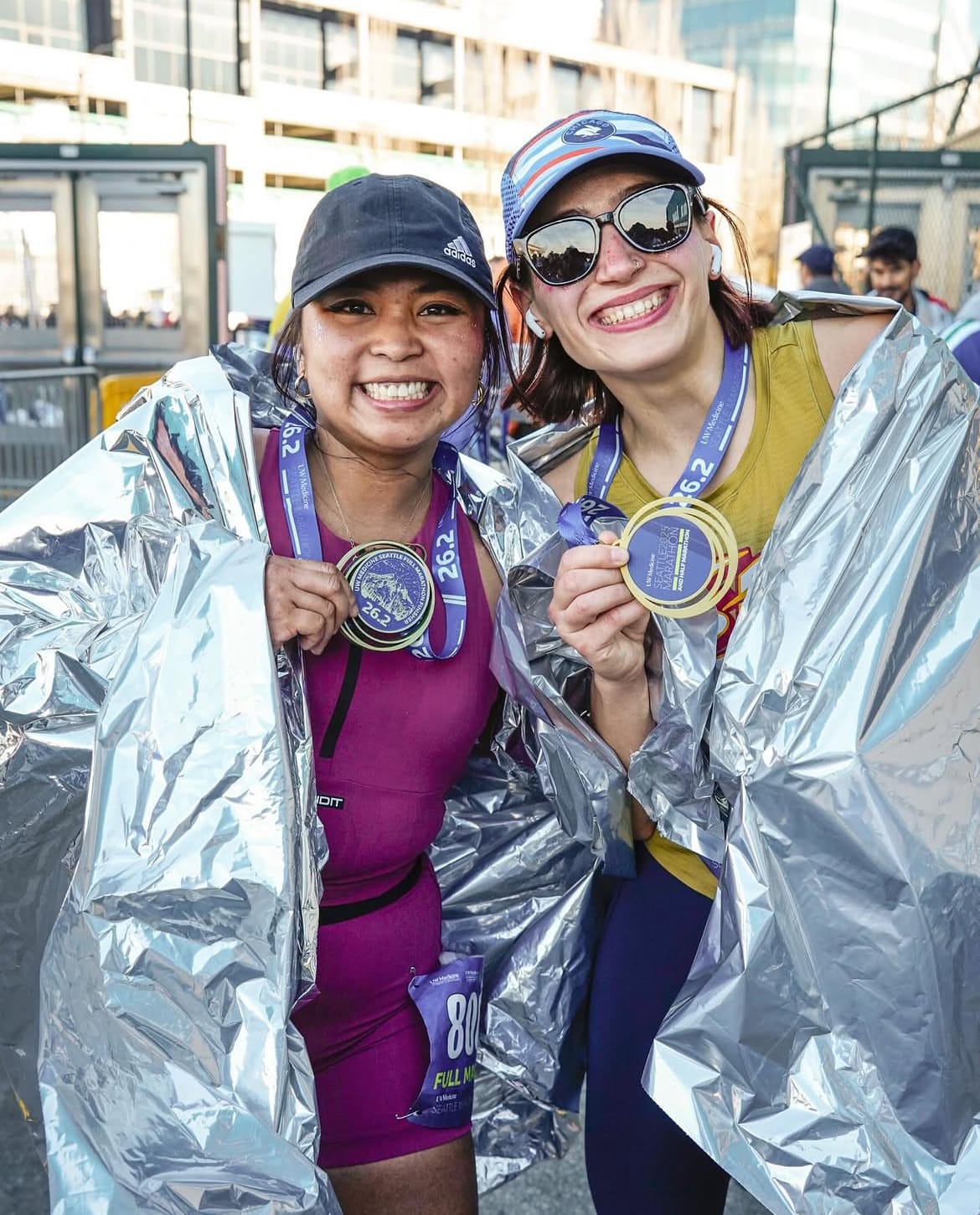
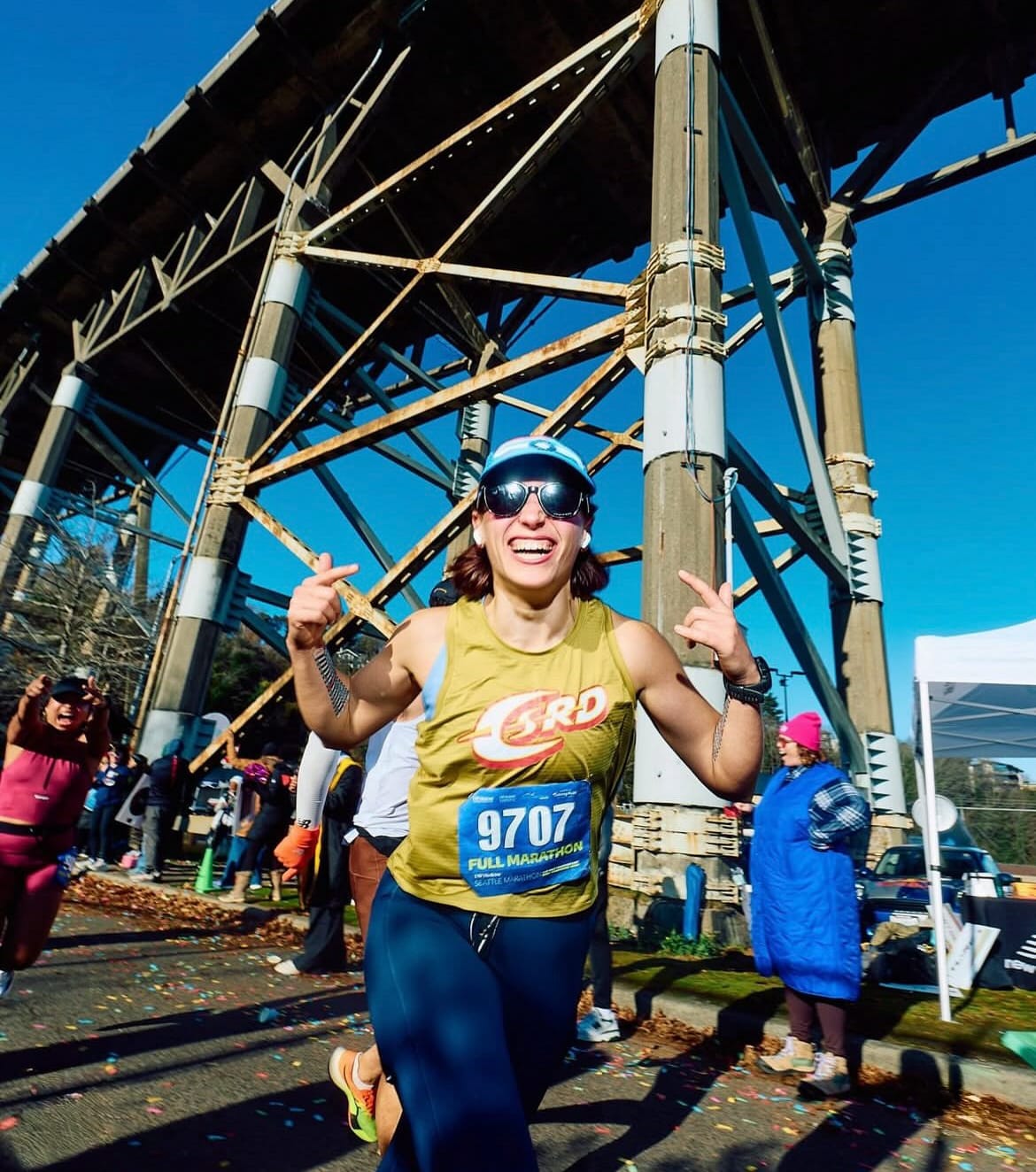
I ran the Chicago Marathon (3:34:50) in October. I recovered from that race, built my base back up to 50 MPW (miles-per-week), and seven weeks later paced Clarisse to her PR at Seattle Marathon (4:37!! She was aiming for 4:44).
For Chicago, I had followed Pfitzinger's 18 week/55 mile peak plan.
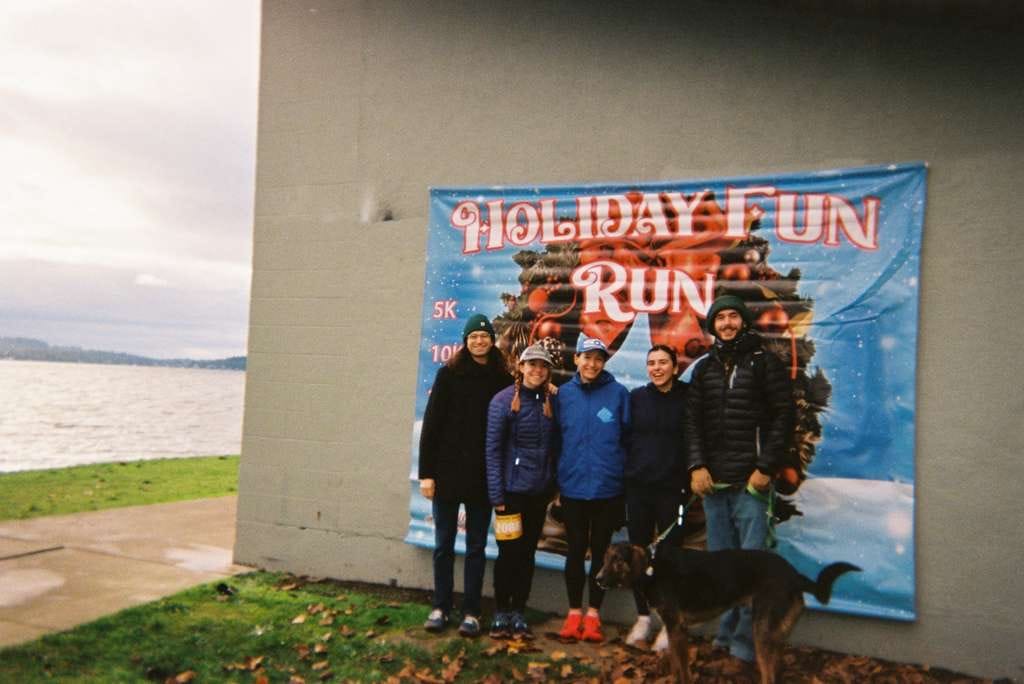
Right before starting Eugene's training block, I raced Magnuson's Holiday Hot Chocolate 10k Fun Run and came in first overall (43:55 chip time on a hilly course). This was a helpful starting benchmark to base my training off of.
This block, I followed Pfitzinger's 18 week/70 mile peak plan from his book, Advanced Marathoning (4th Ed). In the 4th edition, he now uses weekly mileage ranges instead of exact numbers. I shuffled runs based on the logistics of my life so my peak week actually ended up being 81 miles. I averaged 60 miles per week throughout the block with six weeks of 70+ mileage. I did eight 18+ mile long runs.
I usually had one true workout per week (a lactate threshold tempo, hill sprints, or a track-style VO2 max workout), but Pfitz also prescribes a lot of tune-up races, strides, and blocks of marathon pace miles in long runs. There are medium-long runs on Wednesdays ranging from 11-15 miles in addition to the weekly long runs.
On a ski trip in Montana, I cut one run short due to a severe windstorm. I didn't miss any runs until Week 17/18 when I got a cold during taper and skipped two easy runs to heal faster. By the time of the race, I was happy to be over the virus but still had the lingering gross extra mucus you have for a bit after a cold.
I ran two half marathon tune-up races and a 5k tune-up. I don't taper for tune-ups, but I might shuffle runs around to ease logistics (like running my long run mid-week if I can only find a Sunday race so I don't do my long run the day before). The first half marathon was hilly, at altitude in Bozeman, MT during a hailstorm, and after a week of skiing. I ran my 3rd fastest time (1:41) but I gave that race everything and my legs were tired for 2 weeks.
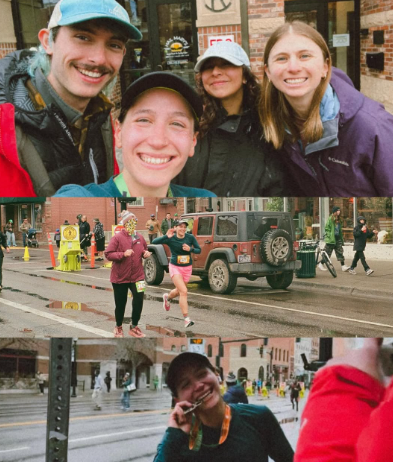
Two weeks later, I ran 1:32:26 at the hilly Everett Mill Town Half Marathon and won 1st place female (18th overall)!
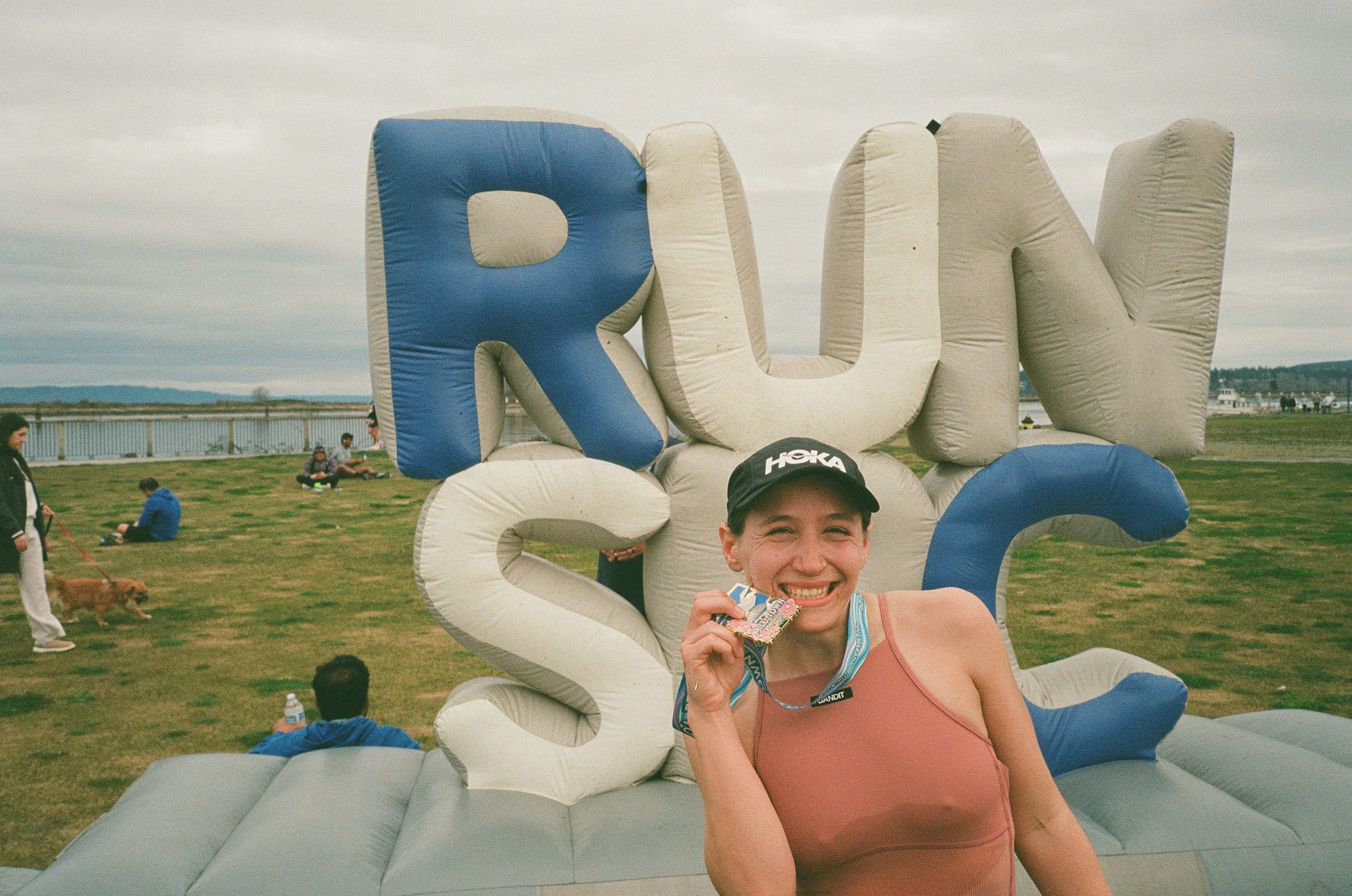
Two weeks before Eugene, I ran Tacoma's Throwback 5k and absolutely botched it on a perfectly flat course (they announced my time as 21:34 but recorded it in the official results as 21:39). In the spirit of the “throwback” theme, it was a stopwatch based course and didn’t use chip timing. Either way, that's ~6:58 pace on a flat course... a couple seconds per mile faster than my hilly half marathon pace. Oof. It was a small local event, so I still got first place female and second overall... though I did lose in the final kick to a dad pushing a stroller (humbling).
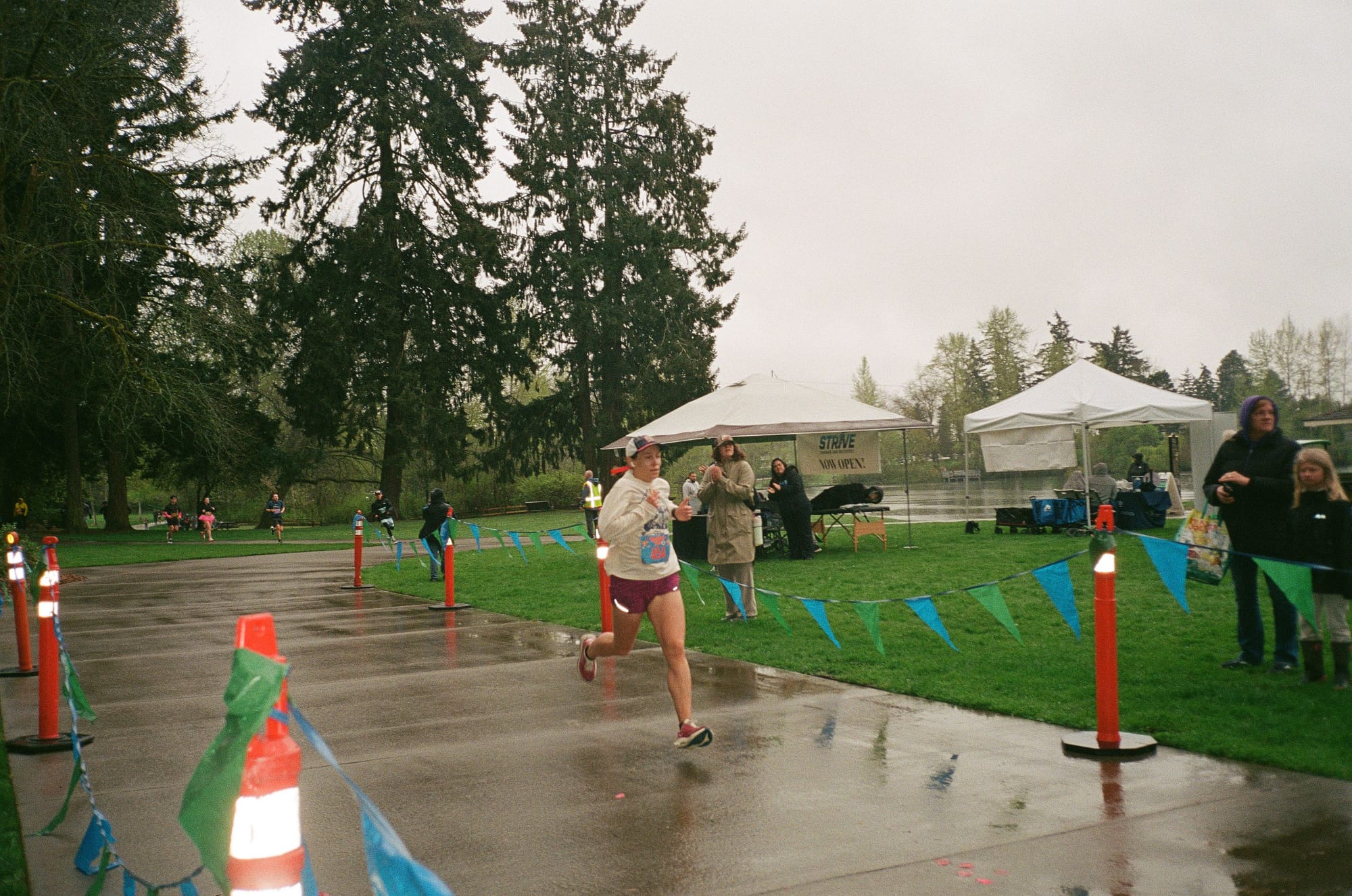
My training paces varied a lot (especially since I also was skiing and doing other sports). Sometimes my recovery pace is 9-something minutes and sometimes it’s 13. I used feel and HR to guide my efforts. I did try to protect my workouts by moving them around in the week based on the other sports/lifts/activities I had going on. Sometimes that wasn’t always possible (or Pfitz himself would call for a VO2 max workout a few days after a tuneup race), but then I ran at 5k or MP “effort” and convinced myself running on tired legs would make me better.
I did my best to strength train twice a week at the start of the block but this became once a week towards the busier end of the block (and I had 3 weeks of no strength work mid-block when I was traveling/very busy). I did my last leg day 12 days out and didn't strength train the week of the race. I finished this cycle feeling strong and injury free but I'd like to more consistently hit two strength days next block to build my power for speed. Working on my core strength has helped me hold better form when tired, so I'd like to continue to work on that.
I was way better at getting enough sleep this cycle (usually over 8 hours and 7 was low for me) but I'd like to step that up to consistently 9+ hours next block due to the high mileage. I fueled enough but next block I'd like to focus more specifically on whole foods and nutrients (as well as taking my supplements more regularly– iron, B12, magnesium, etc). I'd like to get a little leaner before starting the next block– while still fueling well enough to avoid injury.
Unfortunately, I did not climb much at all by the mid-to-end of the block because life was already busy enough with running and ski season. It doesn't help my running at all (the extra training fatigue probably hurts my running to be honest) but I do love climbing so I'd just like to find a way to balance it more with my running training in the future.
Now it's time to recover. After that, I'm thinking about doing a speed/"sharpening" phase to increase my upper end speed (ie, track distances, 5K, 10K, etc).
Next marathon cycle, I'm thinking about stepping my mileage up to average ~70 MPW but doing a shorter block (12 weeks instead of 18, since I'm already pretty aerobically trained and would like more time to work on the speed phase instead). I'm considering something like Pfitz 12/85. But I also want to be able to recover enough from the mileage to hit my quality (speed) sessions hard. In fact, I'd like to add more quality when I can (possibly adding a second workout to the week/doing a couple short track intervals a couple days after a LT (lactate threshold) tempo, making more of my long runs into progression style runs, or adding more MP (marathon pace) miles that cut down into threshold miles at the end of a LR (long run). Essentially, I'd like to combine Jack Daniels' 2Q Plan principles with Pfitzinger's methodologies. Outside of running, it's about to be a gorgeous PNW summer and I'd like to spend a lot of time outside mountaineering, trail running, and climbing. So we'll see.
I'd like to race a track 5K this summer but my next big A-Goal event is the Berlin Marathon in September. I don't have a strict goal but would like to run as fast as possible to set myself up the best I can to go sub-3 at Boston a year from now in April 2027. Feels aggressive. We'll see.
Performance:
I did a 3 day carb load starting Thursday. Eugene starts early at 7AM so I ate bread with jam at 4:30, took Maurten's bicarb at 5:30, and was at the start village by 6:15 ish. I had stomach trouble that morning which luckily went away a little into the race, but I forgot to eat my 40g carb Maurten solid bar before the start.
Before starting, news was also floating around that Sawe had won London already– and BROKE THE 2 HOUR BARRIER IN AN OFFICIAL MARATHON RACE! Kejelcha also went sub-2 (2nd place) and third-place Kiplimo also came in under the previous world record!! What a way to start the day. So inspiring.
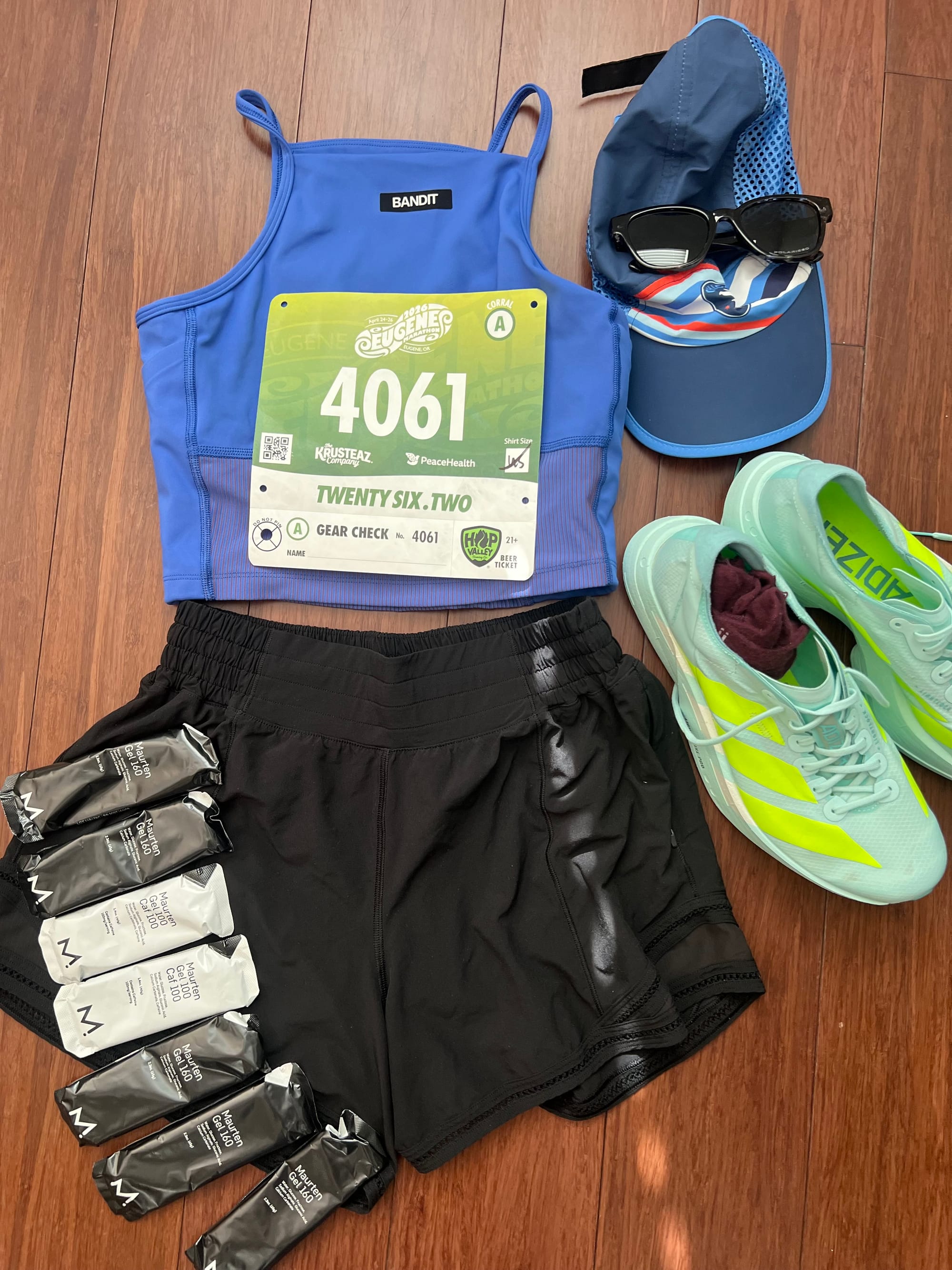
I ate 7 gels during the race (5 Maurten 160s, 1 Maurten Caf100 (caffeinated), and 1 emergency Gu from an aid station because I couldn't open my last Caf100). I took Gatorade every aid station but one (I missed the Gatorade and got water), so I probably got an average of somewhere around ~80-95g of carbs per hour this race.
I began the race a little hungry and realized I forgot to eat my Maurten Solid Bar and hadn't eaten since 4:30AM so I immediately took my first gel right after the start. My legs didn't feel super good and I knew at the start that I was just going to have to hang onto the 3:15 pacer and fight for it today. It wasn't my day for 3:10 (which was already an ambitious goal to begin with). I had 'out-performed' the running calculators from my benchmark half before Chicago which made me a little cocky, but I think my benchmarks from Eugene's block were much more realistic (I ran my tune-up half 4 weeks before Eugene and 16 weeks before Chicago, for example). I had also just been sick, so I think somewhere in the 3:10-3:15 range would have been a more realistic A goal for me on a perfect day. But I ran a strong, controlled, and gritty race and am so happy and proud of myself for achieving my main goal of a Chicago-qualifying and BQ time with a strong buffer!
The course was sun exposed and the day got hotter than I expected (earlier than I expected) so I could feel myself getting a bit crampy towards the end which doesn't usually happen to me. I tried to keep taking Gatorade and to get more of the cup down (at the start I usually drink about a third to half the cup).
I ran this race pretty evenly, with a slight positive split (slowing down) at the end. I'm proud of myself for leaving it all out there. That's hard to do in a marathon. It wasn't one of those perfect days (like I had at the Chicago Marathon) where it feels like everything is clicking and perfect and easy (rainbows, butterflies, unicorns, etc) but it was tough and gritty and I earned every single mile with a smile on my face. It was hard and I did it anyway.
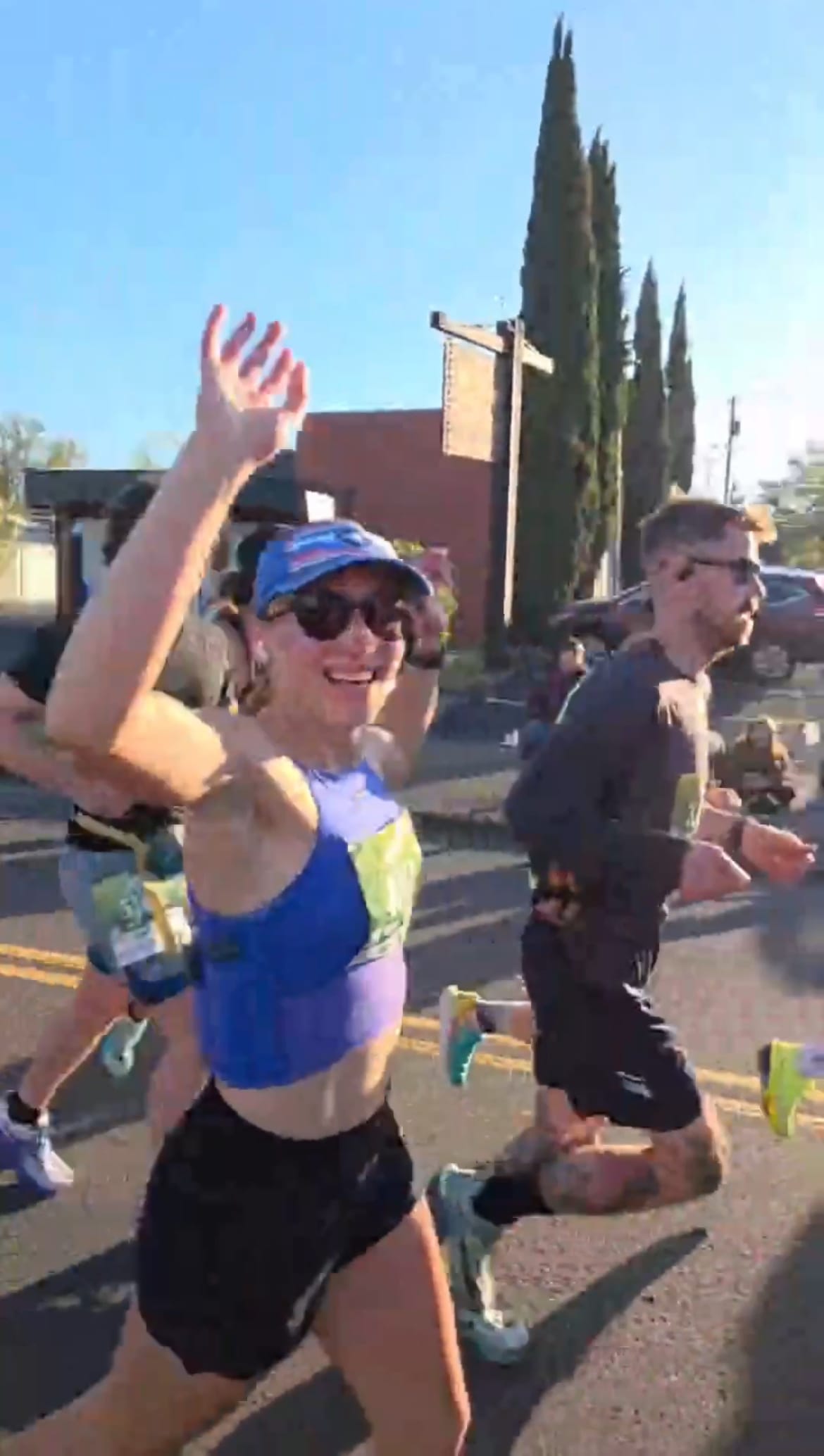
I used my mantras to keep my thoughts positive, let the negative thoughts pass through and didn't fixate on them, enjoyed the spectators' signs and fed off their energy, and visualized success.
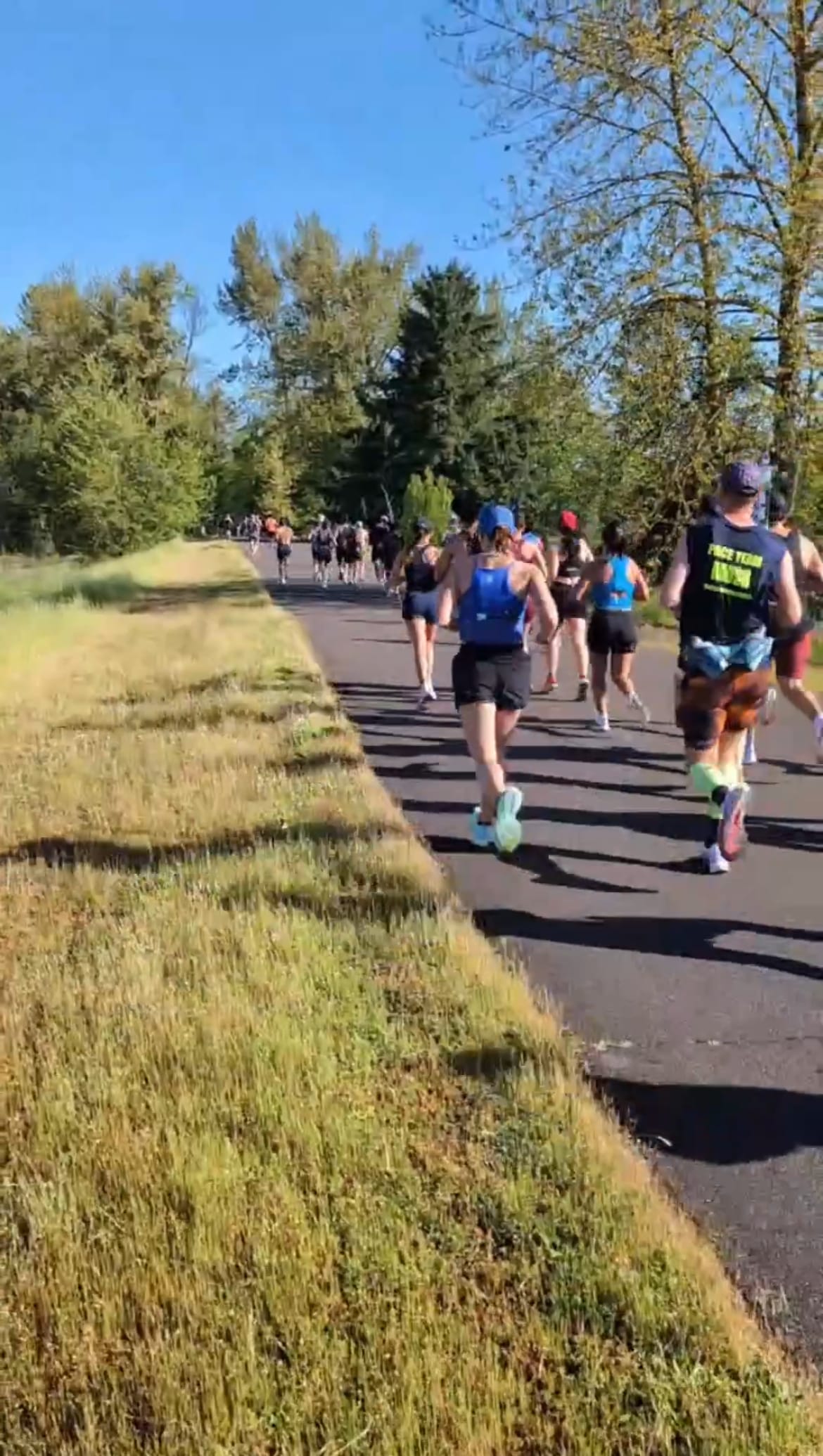
I stayed with the 3:15 pacer until somewhere around Mile 20 and lost him at an aid station. For the last 10k of the race, I fought to finish strong and just run as fast as I could on tired legs (without blowing up).
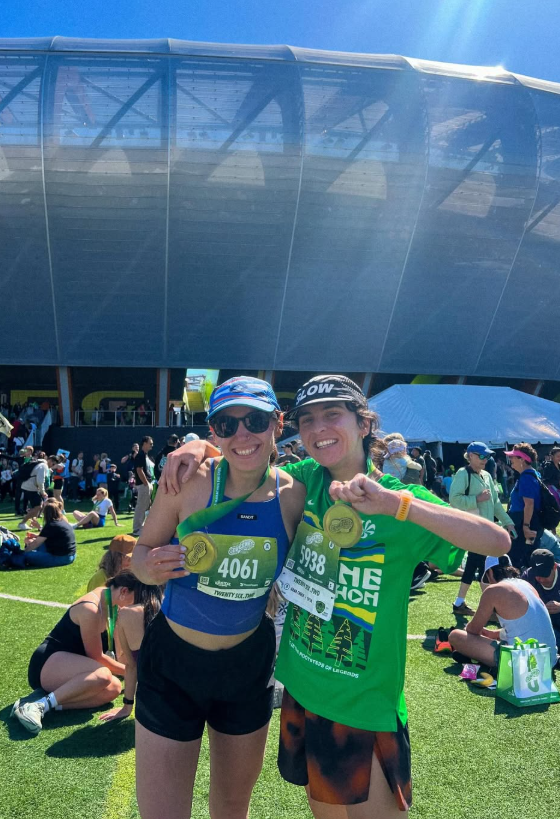
I saw friends and Greg at mile 3, then Greg biked around the city to catch me six more times (including making it to the stands of Hayward Field for the finish). The finish was electric. I saw friends right outside the stadium as I started my kick. I realized I was going to achieve my goal of a safe BQ, saw my friends, and immediately started sobbing all at the same time.
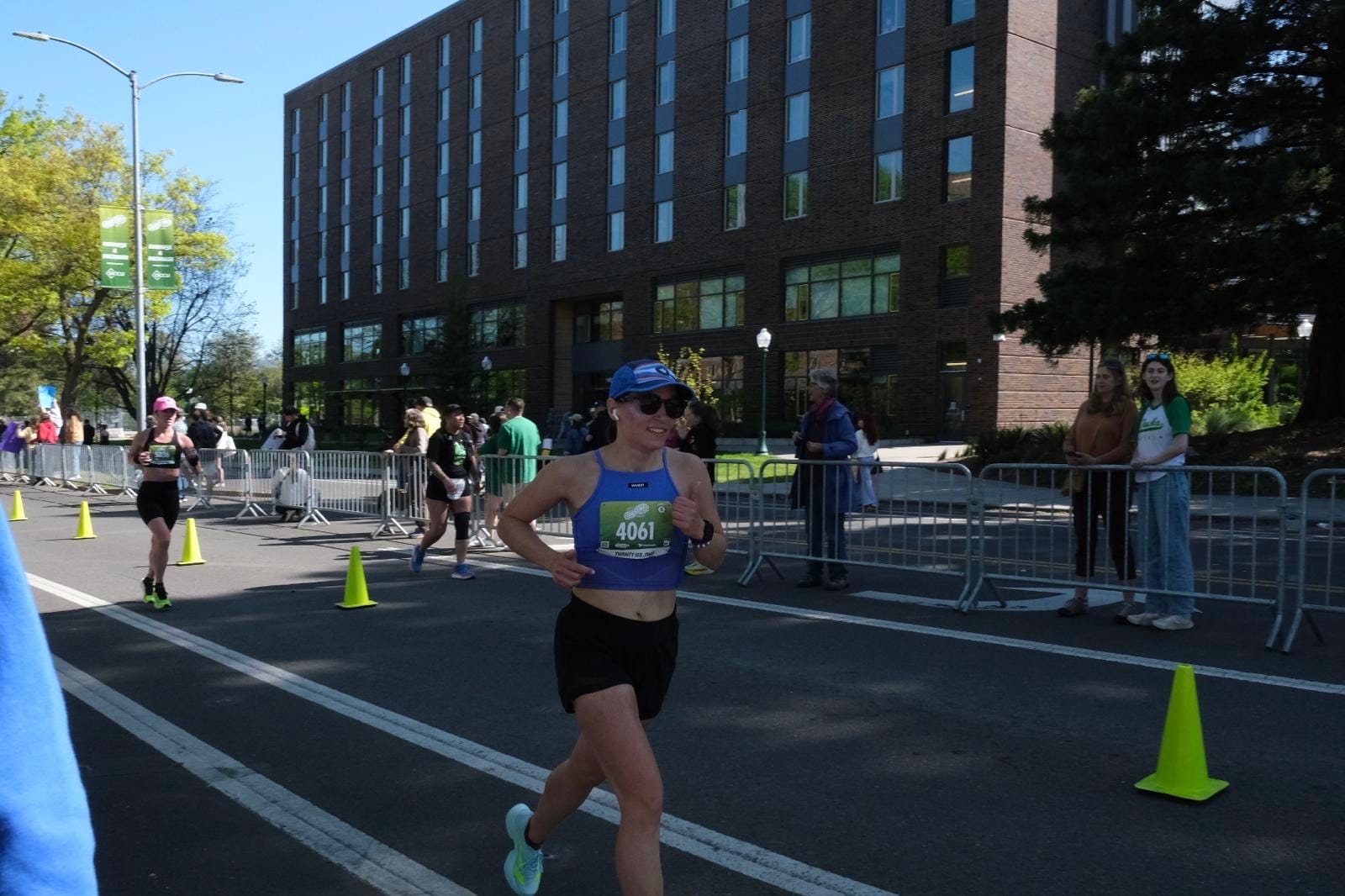
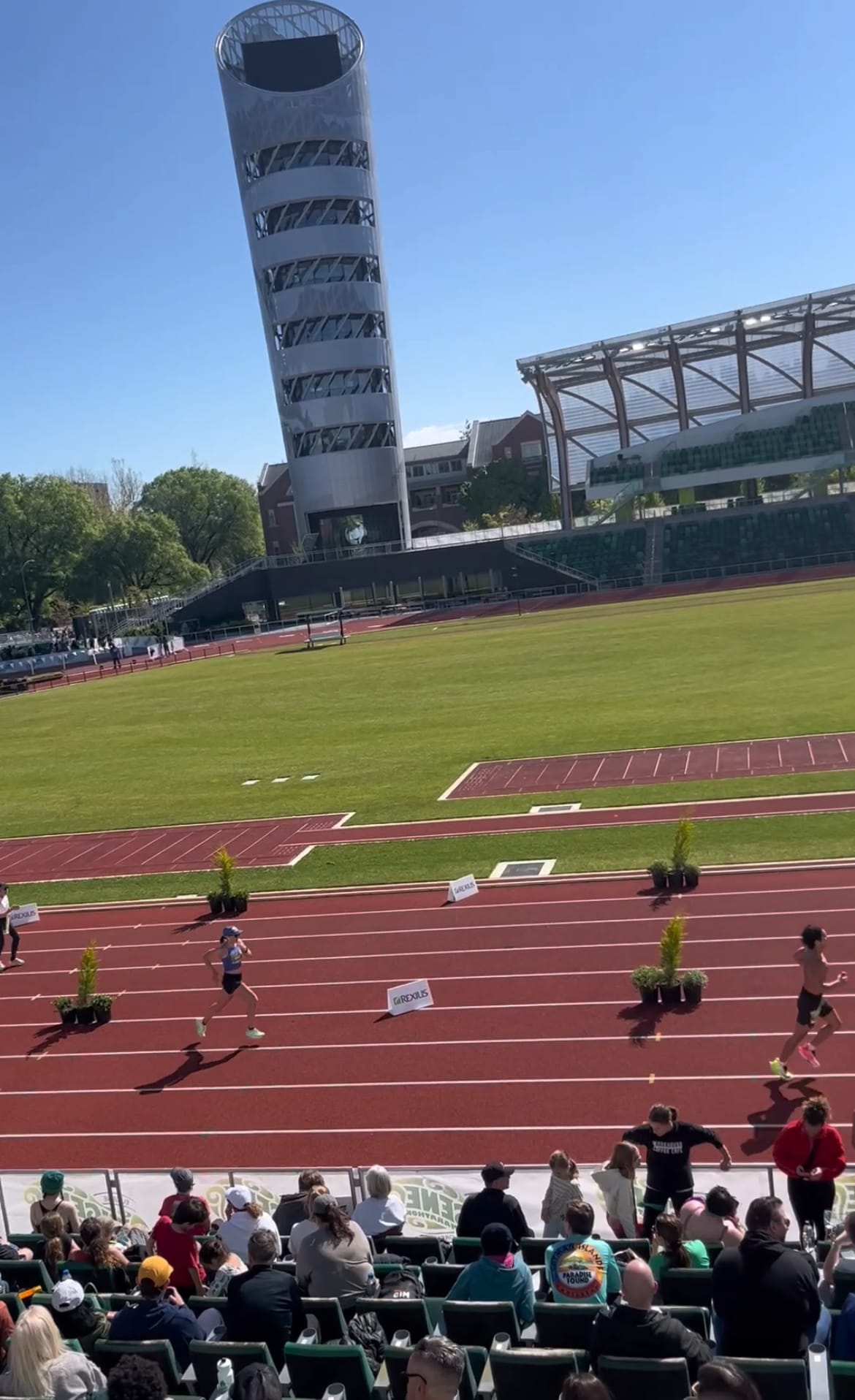
I sprinted the last 200m on Hayward Field and saw Greg and heard Maya cheering my name. I finished then immediately started crying harder.
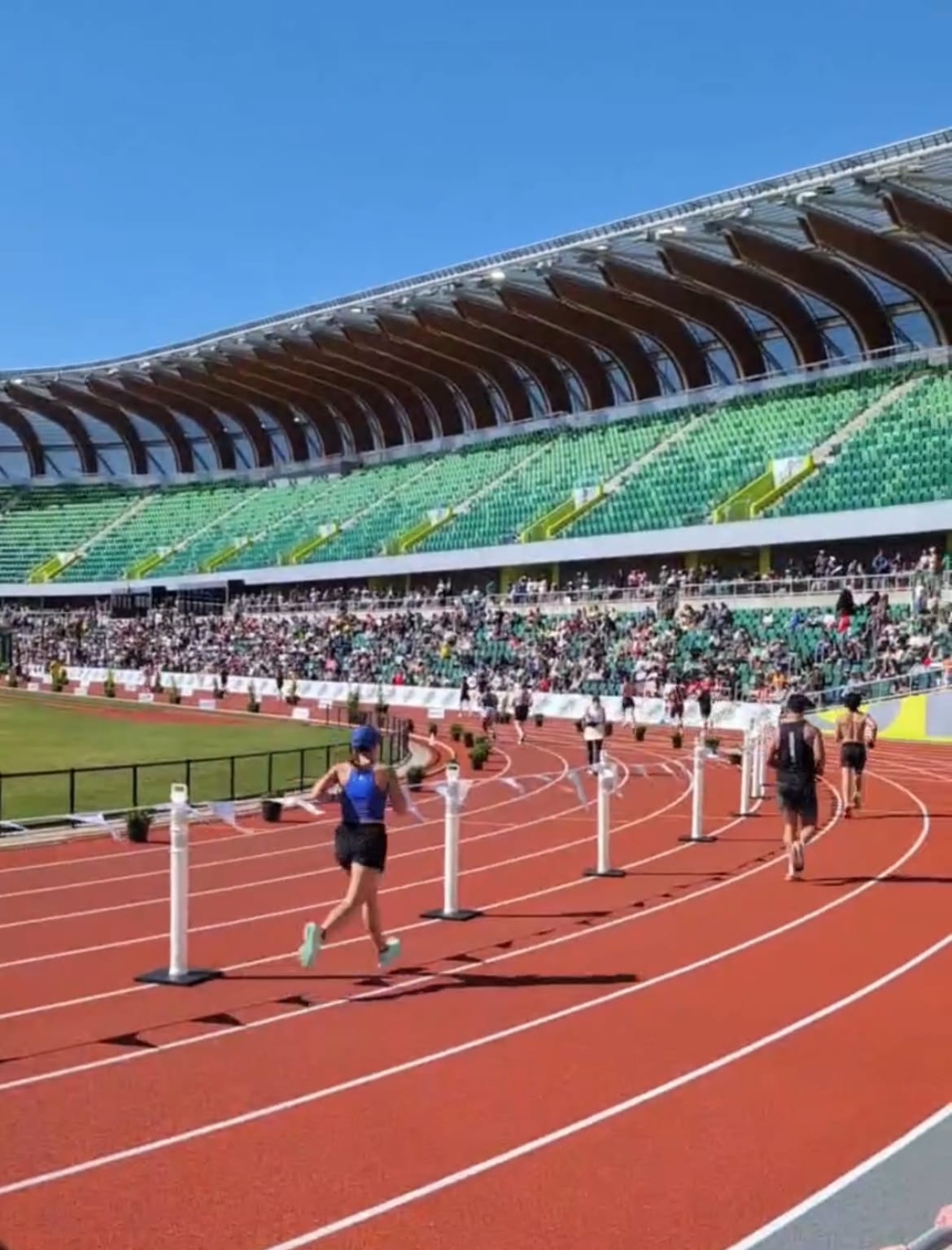
An 18 minute PR from CHI and an almost 9 minute buffer for the Boston Standard!
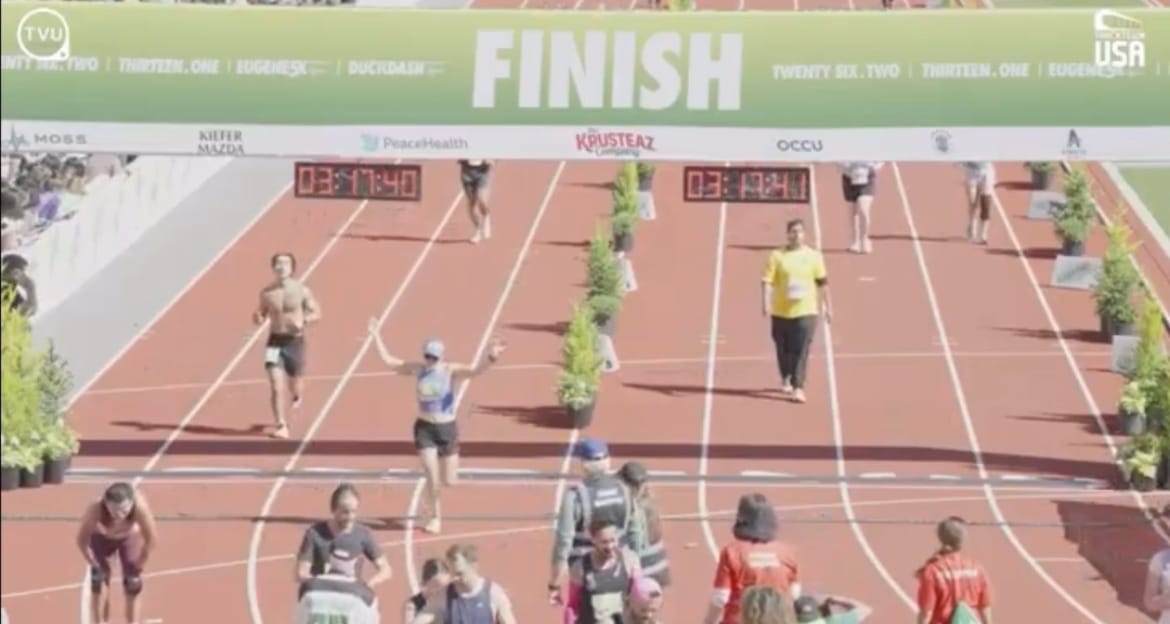
I remember finishing Chicago thinking that I could work harder in my next training block (up my mileage/run my workouts even harder) and race my next marathon more aggressively. I couldn't say that about this block or this race and that felt GOOD. I gave it everything.
It was fun to have so many training partners for this race (8 of us in the training group ran Eugene! Plus lots of other friends. Big race!) and inspiring to all show up and try hard together. My friends are so cool and fast and strong and I'm so proud of us! Congrats to Mia on her BQ as well! A big PR 5 weeks after also racing hilly Oakland Marathon is so gnarly.
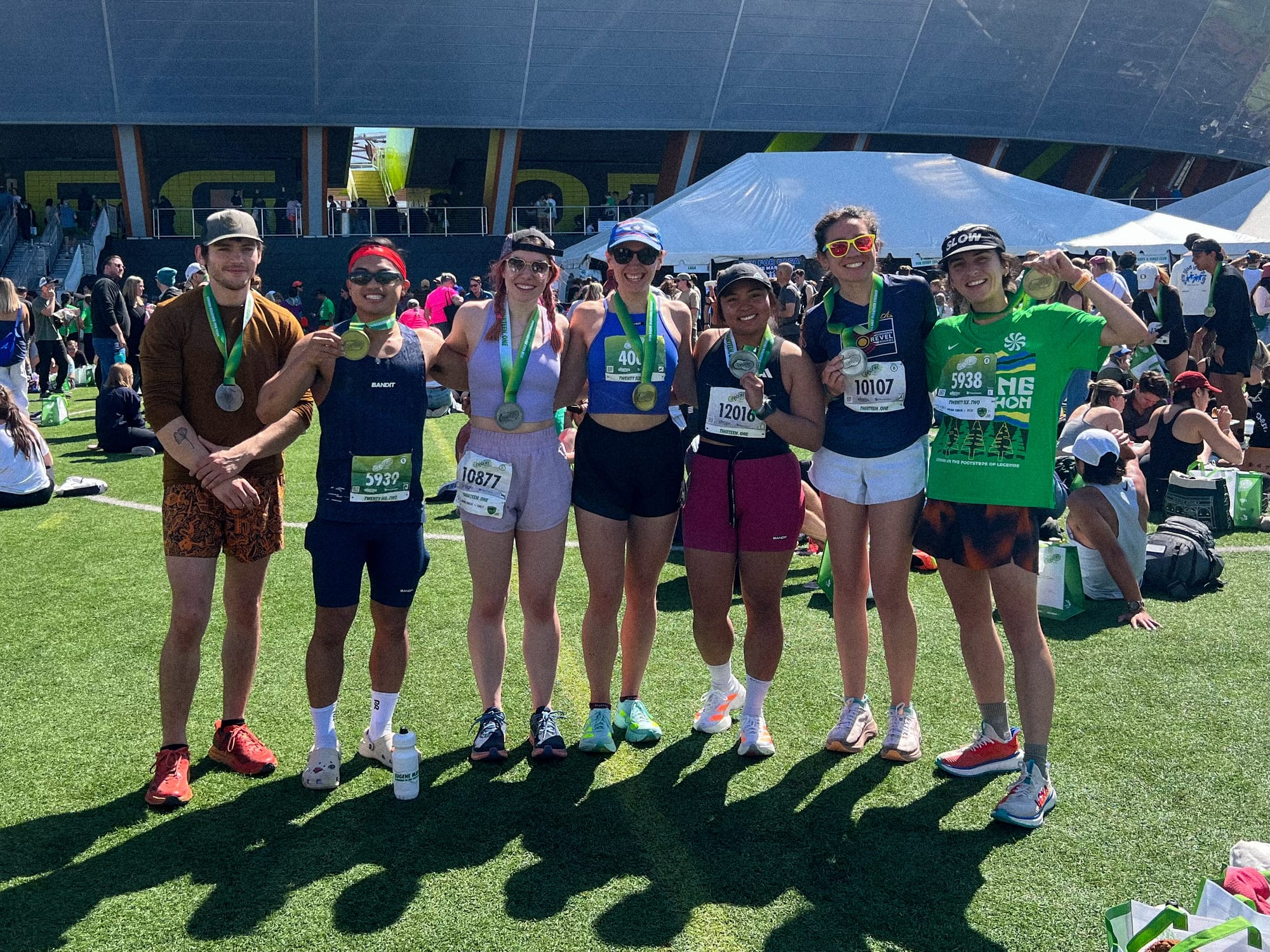
Best of all, I finished this cycle and marathon healthy and stoked for what's next. I don't feel burnt out- I feel EXCITED! I can't wait to run and train again. I want to go sub-1:30 in the half, run a sub-20 5k, continue my reign of terror on the local race scene (but also run some competitive races too), and work towards the sub-3 benchmark times. I have so many ideas floating around about different workouts and things to try next time. I'm feeling really excited but afraid of my next goals and that's a good place to be. Thank you to everyone who has trained with me and supported me! I love running.